How to Deal with a Damp Home and Window Condensation? Do Dehumidifiers Really Help?
A damp home, window condensation and musty smells around corners are common problems for many overseas households, especially during winter, rainy seasons or when drying clothes indoors. These issues are often linked to high indoor humidity, temperature differences between indoors and outdoors, poor ventilation, indoor laundry drying, cooking and steam from showers. A dehumidifier works by removing excess moisture from the air, helping to control indoor humidity and reduce window condensation, musty smells and clothes that take too long to dry. However, if the dampness is caused by leaks, water ingress or structural issues, a dehumidifier can only help as a supporting measure and cannot replace proper repairs.

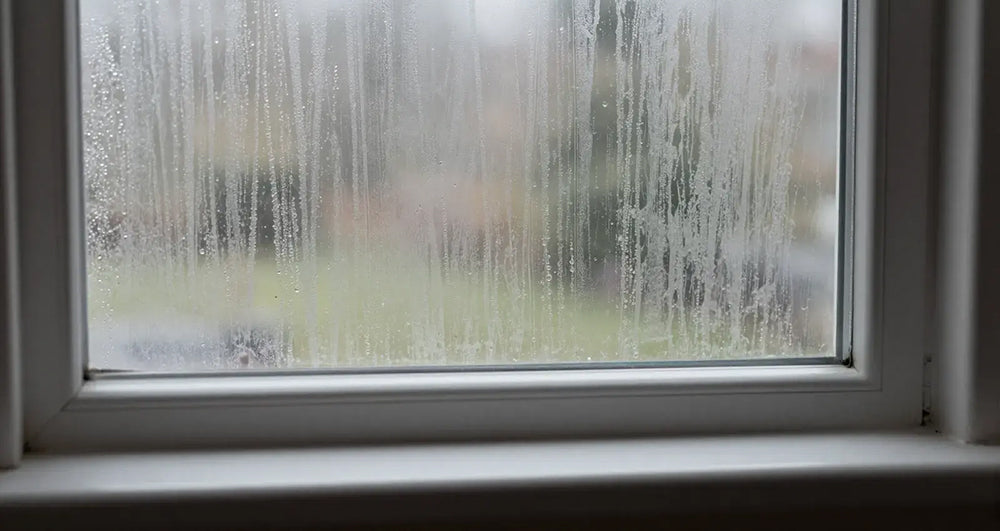
Long-term dampness, window condensation or musty smells often indicate that indoor humidity needs better control.
Why should damp and mould problems not be ignored?
If a damp environment is left untreated for a long time, mould is more likely to appear around wall corners, windows, wardrobes or behind furniture. Mould and damp conditions may irritate the respiratory system, eyes and skin, and are especially worth paying attention to for people with asthma, allergies or sensitive airways, as well as children and older adults.
If your home often has musty smells, black spots, water around windows or clothes that take too long to dry, it should not be treated as a minor household inconvenience only. Controlling humidity early, improving ventilation and checking for leaks or water ingress can help create a healthier and more comfortable living environment.
Key Takeaways
- Window condensation is often linked to humidity and temperature differences: moisture in indoor air condenses when it meets a cold window surface.
- Dehumidifiers can help with high humidity: they reduce indoor moisture, helping with condensation, musty smells and dampness from indoor laundry drying.
- Identify the source first: if the problem comes from leaks, water ingress or structural issues, a dehumidifier can only support drying and cannot replace repairs.
Why does a home become damp? What are the common causes?
A damp home does not always mean there is a serious building problem. In many cases, moisture gradually builds up through everyday living.
- Large temperature differences between indoors and outdoors in winter
- Cold window glass, window frames or external walls
- Indoor laundry drying adding a large amount of moisture to the air
- Steam from cooking, boiling soup and showering not being removed properly
- Windows kept closed for long periods, leading to poor air circulation
- North-facing rooms, external-wall rooms, ground-floor rooms or storage areas being colder
- Older homes with weaker insulation, making window condensation more likely
If there are only water droplets on the window in the morning, it is often a condensation issue. However, if the same area has long-term water marks, peeling paint, bubbling walls or a wet floor, you should check whether there is a leak or water ingress.
What causes window condensation? Does it mean the house has a problem?
Window condensation happens when moist indoor air touches a colder window surface and turns into water droplets. These droplets usually collect on the glass, window frame or windowsill.
This is very common during winter in the UK, Europe, Australia and New Zealand, especially when:
- Water droplets appear on windows after waking up
- Bedroom windows feel wet in the morning
- Kitchen or bathroom windows mist up easily
- Glass becomes wet after drying clothes indoors
- Black spots or musty smells start appearing around window frames or windowsills
A small amount of condensation does not necessarily mean there is a structural problem. However, if it is not managed over time, damp areas around windows and wall corners may become more likely to develop musty smells, black mould or moisture damage to wooden window frames.
Do dehumidifiers help with dampness and window condensation?
Yes, especially when the dampness is mainly caused by high indoor humidity.
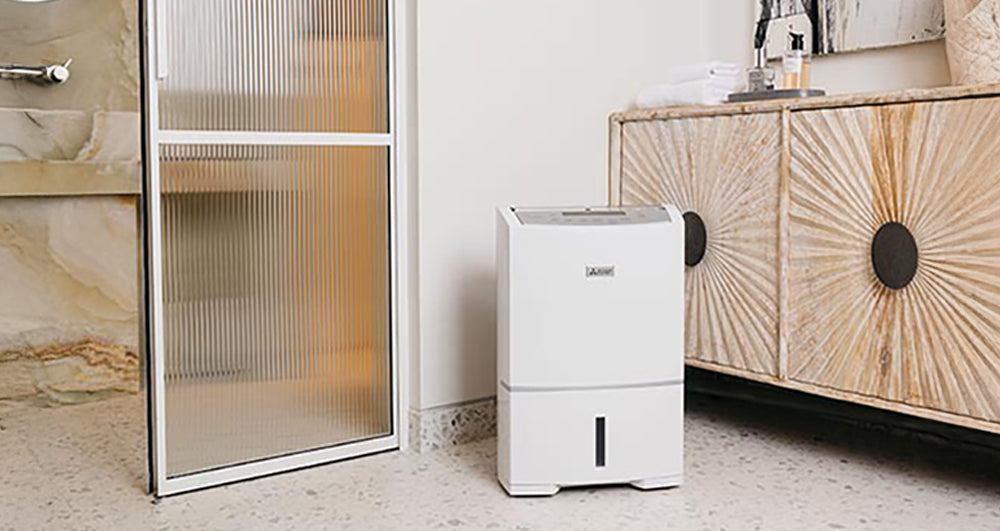
A dehumidifier draws in moist air, condenses and collects the water into a tank, then releases drier air back into the room. When indoor relative humidity is reduced, problems such as window condensation, musty smells, clothes taking too long to dry and dampness inside wardrobes can often improve.

A dehumidifier can help reduce indoor humidity, especially for window condensation, indoor laundry drying and damp seasons.
A dehumidifier is particularly useful if you often experience:
- Water droplets on windows
- Musty smells in bedrooms or living rooms
- A room feeling very damp after drying clothes indoors
- Musty smells inside wardrobes or shoe cabinets
- Wet windowsills on winter mornings
- Dampness around bathrooms or hallways
- A desire to avoid using a tumble dryer too often
- A need to keep indoor humidity more stable
If the problem is caused by leaking pipes, roof leaks, water ingress through external walls or other building issues, the root cause should be addressed first. A dehumidifier can help reduce air humidity, but it cannot repair the source of water ingress.
What is the ideal humidity level for a home?
For many homes, a relative humidity range of around 40%–60% is commonly considered practical. If humidity is too high, window condensation, musty smells, slow-drying laundry and damp wardrobes are more likely. If humidity is too low, the air may feel overly dry.
For many households, the most practical approach is to use a humidity meter rather than relying only on how the room feels. Some dehumidifiers also include automatic humidity control, allowing you to set a target such as around 50%, 60% or 70%, so the machine can adjust operation based on the room’s humidity level.
If your home is often above 65%–70% humidity and you also notice window condensation, musty smells or clothes that take too long to dry, a dehumidifier may be worth considering.
How should you choose a home dehumidifier? What do capacity and features mean?
When choosing a dehumidifier, many people focus only on water tank size. However, the more important figure is usually the daily dehumidifying capacity. This is often shown as L/day, meaning how much moisture the machine can remove in a day under specified test conditions.
| Use Case | Suggested Direction |
|---|---|
| Bedroom, small room or rental flat | Around 10L–13L |
| Living room or everyday family dehumidifying | Around 14L–17L |
| Larger space or more obvious dampness | Around 16L–23L or above |
| Frequent indoor laundry drying | Higher dehumidifying capacity or laundry drying mode |
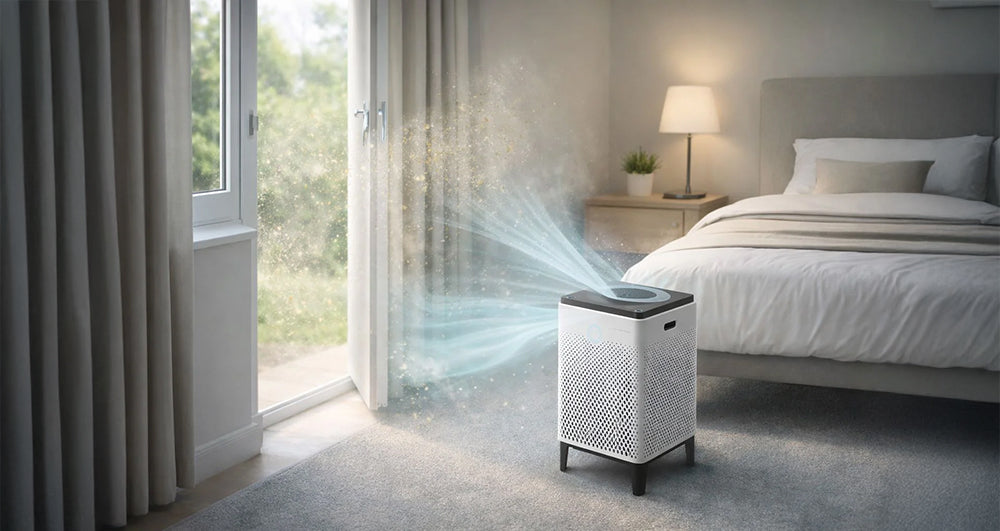
| Concern about air quality | Consider a 2-in-1 air purifying dehumidifier |
| Night-time use | Choose quiet mode and automatic humidity control |
Water tank size and daily dehumidifying capacity are not the same thing. A larger water tank means you do not need to empty it as often; a higher dehumidifying capacity means stronger moisture removal performance. Actual results will also depend on room temperature, humidity, room size and whether doors and windows are closed.
OurDearHome Dehumidifier Buying Recommendations
OurDearHome selects Japanese and Asian brand dehumidifiers suitable for overseas households, covering different home sizes and usage needs. Here are some common buying directions.

Larger Spaces / Premium Air-Purifying Dehumidifier
MITSUBISHI BIKUKAN Air Purifying Inverter Dehumidifier | MJ-EHV / MJ-EH Series is suitable for households that want dehumidifying, air purification and deodorising functions in one appliance. It offers 14.2L, 15.5L and 23L capacity options, with a 5.5L large water tank, continuous drainage, PM2.5 / odour / filter / full-tank indicators and wheels, making it suitable for larger spaces or homes that care about air quality.
View Product
Everyday Family Use / Indoor Laundry Drying / Mould Prevention
MITSUBISHI Dehumidifier | MJ-EV / MJ-E Series is suitable for everyday dehumidifying, indoor laundry drying and damp-prone bathroom areas. This series offers 16L and 23L options, with intelligent laundry drying mode, bathroom mildew guard, internal drying, PM2.5 filtration, a 5.5L water tank, timer, child lock and wheels. The 23L model also features inverter control and Eco Auto humidity settings.
View Product
Bedroom / Small Space / Rental Home
MITSUBISHI Dehumidifier | MJ-E Series 10L / 13L is suitable for bedrooms, small living rooms, rental homes or households that do not want a large model. It includes smart laundry drying, night laundry drying, a reusable silver-ion filter, standalone air purification mode, internal drying, mildew guard, automatic humidity control, a 4.7L water tank and 1–9 hour timer.
View Product
Premium Large Capacity / Fast Dehumidifying / Multi-Mode Use
Panasonic Inverter Dehumidifier | F-YVB38H is suitable for larger spaces, fast dehumidifying, indoor laundry drying, shoe cabinets and damp wardrobes. It features inverter control, W-HEXS dual dehumidification, ECONAVI, nanoe® X Mark 3 and multiple modes including quiet, shoe/cabinet drying, powerful, smart, gentle, continuous, fan, laundry drying and keep-dry modes.
View ProductHow can you use a dehumidifier more effectively?
Whether a dehumidifier works well depends not only on the model and capacity, but also on how it is used.
- Keep doors and windows closed while using it
- Place it in a well-ventilated position, not pressed against walls or furniture
- Focus on the dampest room first
- When drying clothes indoors, use it in a smaller room where the door can be closed
- Clean the filter regularly
- Empty the water tank when full, or use continuous drainage if available
- Combine it with ventilation, extractor fans and moisture removal after cooking or showering
If the room is very large, or several rooms are damp at the same time, you can dehumidify rooms one by one or choose a larger-capacity model.
How should dehumidifiers, ventilation and heating work together?
A dehumidifier is not the only method. It works best when combined with good everyday home habits.
- Use extractor fans after cooking and showering
- Open windows briefly for ventilation when the weather is suitable
- Dry laundry in one room where possible
- Keep a basic indoor temperature in winter to reduce condensation on cold surfaces
- Use a humidity meter to monitor changes
For many households in the UK, Europe or Australia, the most practical use of a dehumidifier is to help keep indoor humidity stable when humidity is high, windows condense easily, clothes are dried indoors or windows are opened less often in winter.
FAQ
Q: Can a dehumidifier really reduce window condensation?
A: It can help. When window condensation is mainly caused by high indoor humidity, reducing the moisture level with a dehumidifier can often reduce condensation. However, the result also depends on window insulation, the temperature difference between indoors and outdoors, and ventilation.
Q: Can a dehumidifier prevent mould?
A: A dehumidifier can help control humidity and reduce the damp conditions where mould is more likely to grow. However, existing mould still needs to be cleaned properly, and if the mould is caused by leaks or water ingress, the water source should be fixed first.
Q: How long should I run a dehumidifier?
A: It depends on room size, humidity level and how the room is used. During damp weather, indoor laundry drying or when first dealing with moisture, it may need to run for longer. For daily use, automatic humidity mode can help the machine start and stop as needed.
Q: Can I use a dehumidifier in a bedroom?
A: Yes. For bedroom use, choose a suitable capacity with quiet mode, automatic humidity control and safety shut-off features. If the sound affects sleep, you can run it for a period before bedtime.
Q: What is the difference between a dehumidifier and an air purifier?
A: A dehumidifier mainly lowers air humidity, while an air purifier mainly filters particles, odours or pollutants from the air. Some models are 2-in-1 air purifying dehumidifiers, suitable for households that want to manage both humidity and air quality.
Q: Can a dehumidifier solve wall water ingress?
A: Not completely. A dehumidifier can help lower air humidity and speed up surface drying, but it cannot repair leaks, external wall water ingress or pipe problems. If there are clear water marks, bubbling walls or persistently damp walls, the root cause should be inspected and repaired.
Conclusion: A dehumidifier can help with dampness, but you need to understand the source
A damp home, window condensation and musty smells are often linked to high indoor humidity. For households in the UK, Europe, Australia, New Zealand and other regions with noticeable damp seasons, a dehumidifier can help control humidity and reduce condensation, musty smells and moisture from indoor laundry drying.
However, a dehumidifier is not a cure-all. If dampness comes from leaks, wall water ingress or structural issues, the source should be fixed first. Choosing the right capacity, features and usage method is the key to making a dehumidifier work effectively.
Want to improve dampness and window condensation at home?
OurDearHome selects Japanese and Asian brand dehumidifiers suitable for bedrooms, living rooms, indoor laundry drying, larger spaces and households concerned about air quality.
Browse Dehumidifiers