Do Dehumidifiers Help Dry Clothes? Indoor Laundry Drying, Musty Smells and Buying Guide
Using a dehumidifier to dry clothes can be very helpful, especially for homes that dry laundry indoors, experience damp weather, cannot open windows easily in winter, or do not have a tumble dryer. A dehumidifier does not dry clothes by blasting them with high heat. Instead, it lowers the humidity in the room, allowing moisture in the clothes to evaporate more easily and collect in the water tank. When used in a smaller room with doors and windows closed, with enough space between garments and a laundry drying mode where available, the effect is usually more noticeable. It can also help reduce window condensation, musty smells and dampness caused by indoor laundry drying.

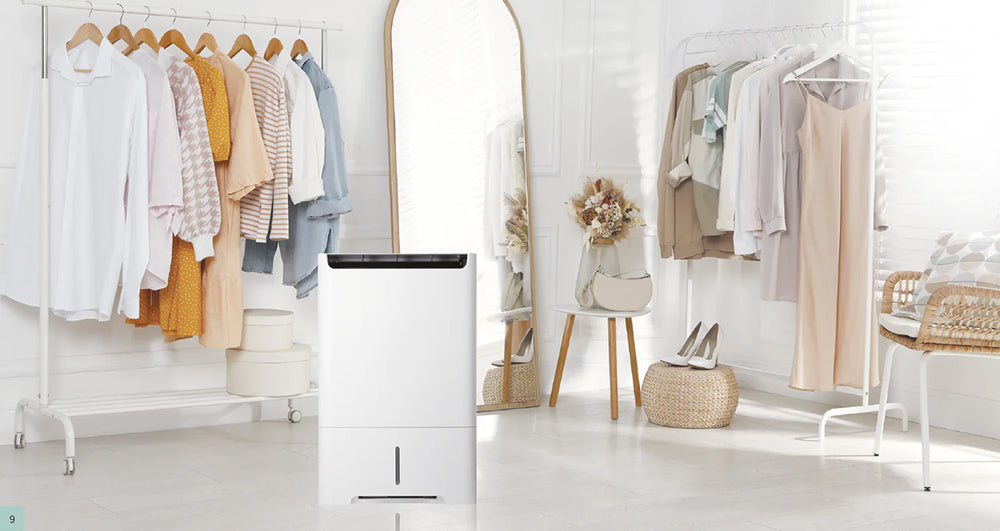
When drying clothes indoors, a dehumidifier can help lower room humidity and make laundry easier to dry thoroughly.
Key Takeaways
- Dehumidifiers can help dry clothes: especially for indoor laundry drying, winter, rainy seasons or households without a tumble dryer.
- They do not directly heat-dry clothes: a dehumidifier mainly lowers room humidity so moisture can evaporate from laundry more easily.
- Usage method matters: a smaller room, closed doors and windows, space between clothes and laundry mode can all improve results.
Why does indoor laundry drying make a room damp and musty?
When clothes are dried indoors, the moisture in the fabric gradually evaporates into the air. If the room has poor airflow, the humidity is already high, or windows are kept closed during winter, that moisture stays inside the room and makes the air feel damp.
Common signs include:
- Window condensation after drying clothes indoors
- Clothes taking a long time to dry, sometimes still slightly damp the next day
- Musty or stale smells on laundry
- Dampness around wall corners, windowsills or wardrobes
- A damp smell in bedrooms or living rooms
Without dehumidifying or ventilation, moisture simply moves from your clothes into the room air, windows and wall corners. Long-term high humidity can lead to musty smells, window condensation and mould problems.
How does a dehumidifier help clothes dry faster?
A dehumidifier draws in moist air, condenses the water from the air into a tank, and releases drier air back into the room. Once the room humidity drops, moisture from the clothes can evaporate more easily, helping laundry dry more thoroughly.
In simple terms, the process works like this:
- Wet clothes release moisture into the air
- The dehumidifier removes moisture from the air
- The room air becomes drier
- The clothes continue releasing moisture
- The laundry gradually dries

Some dehumidifiers include a laundry mode or clothes drying mode, which increases dehumidifying and airflow performance for indoor drying.
What is the difference between drying clothes with a dehumidifier and using a tumble dryer?
A dehumidifier and a tumble dryer can both help dry laundry, but they work in different ways and suit different homes. A dehumidifier is better as an indoor laundry drying aid, while a tumble dryer is better when you need to dry large loads quickly.
| Comparison | Dehumidifier Drying | Tumble Dryer |
|---|---|---|
| How it works | Lowers room humidity to support natural drying | Uses heat and drum movement to dry clothes directly |
| Speed | Usually slower | Usually faster |
| Gentleness on clothes | Gentler, with no tumbling | Some fabrics may shrink, deform or wear faster |
| Space needed | Needs a drying rack and suitable room | Needs space for the dryer unit |
| Extra benefit | Also reduces room humidity | Mainly dries clothes |
| Best for | Indoor drying, rental homes, households without a tumble dryer | Households that need to dry large loads quickly |
A dehumidifier may not completely replace a tumble dryer, but for homes that often dry laundry indoors and want to reduce dampness and musty smells, it is a very practical solution.
How should you use a dehumidifier for indoor laundry drying?
How well a dehumidifier dries clothes depends heavily on how it is used. These points are especially important:
- Choose a smaller room where the door can be closed
- Keep doors and windows closed while using the dehumidifier
- Leave space between garments instead of overlapping them
- Do not block the dehumidifier air outlet with clothes
- Do not place wet clothes directly over the dehumidifier body
- Spin-dry clothes properly in the washing machine first
- Use laundry mode, clothes drying mode or continuous dehumidifying mode
- Empty the water tank when full, or use continuous drainage if available
- Use a fan if needed to improve airflow around the laundry
Thick towels, jeans, bedsheets and heavy clothing usually take longer to dry. If clothes are packed too closely together, air cannot move between them properly and drying performance will be reduced.
What does Laundry Mode / Clothes Drying Mode do?
Many dehumidifiers include laundry mode, clothes drying mode or a similar drying function. These modes usually increase dehumidifying performance, boost airflow or allow the machine to run continuously for a period of time, helping the room stay at a lower humidity level during indoor laundry drying.
The design of laundry mode varies between brands and models. Some models use humidity sensors, while others offer stronger airflow or adjustable direction. If you often dry clothes indoors, choosing a dehumidifier with laundry mode or intelligent clothes drying can be very useful.
Does drying clothes with a dehumidifier use a lot of electricity? Is it cheaper than a tumble dryer?
The running cost of using a dehumidifier for laundry depends on power consumption, running time, room humidity, laundry amount, room temperature and local electricity prices. In general, a dehumidifier does not directly dry clothes with high heat, so many households see it as a gentler way to support indoor laundry drying.
However, if a dehumidifier runs continuously for long periods, it still uses electricity. Inverter control, automatic humidity settings and laundry mode can help the appliance operate more efficiently according to the room conditions.
Estimated cost depends on: power rating in W ÷ 1000 × hours used × your electricity price per kWh. Since electricity prices vary by country and supplier, it is best to estimate using the product wattage and your local tariff.
How many litres should you choose for indoor laundry drying?
If your main purpose is indoor laundry drying, daily dehumidifying capacity is usually more important than water tank size. The larger the room, the more laundry you dry and the higher the humidity, the stronger the dehumidifying performance you may need.
| Use Case | Suggested Direction |
|---|---|
| Small laundry load / small bedroom | Around 10L–13L |
| Everyday laundry for 2–3 people | Around 13L–17L |
| Frequent washing / larger laundry loads | Around 16L–23L |
| Thick clothes, bedsheets or towels | 23L or larger-capacity model |
| Drying laundry while reducing room dampness | Consider a larger-capacity or inverter model |
Drying clothes in a smaller enclosed room is usually more effective than using a large open-plan area. If wet clothes are placed in a living room or open space, the dehumidifier has to process a much larger volume of air, and drying time may be longer.
OurDearHome Dehumidifier Recommendations for Laundry Drying
OurDearHome selects dehumidifiers suitable for overseas households that dry laundry indoors, manage everyday dampness and reduce home humidity. Here are some common buying directions.

Main Choice for Everyday Family Laundry Drying
MITSUBISHI Dehumidifier | MJ-EV / MJ-E Series is suitable for everyday indoor laundry drying, household dehumidifying and damp-prone bathroom areas. This series offers 16L and 23L options, with intelligent laundry drying mode, bathroom mildew guard, internal drying, PM2.5 filtration, a 5.5L water tank, timer, child lock and wheels. The 23L model also features inverter control and Eco Auto humidity settings.
View Product
Practical Inverter Option for Laundry Drying
SHARP Inverter Dehumidifier | DW-RN23A-W features a DC inverter motor, auto and laundry drying modes, adjustable airflow direction, a 3.8L water tank, continuous drainage, timer, child lock and wheels. It is suitable for households looking for practical everyday dehumidifying and indoor laundry drying functions.
View Product
Bedroom / Small Space / Small Laundry Loads
MITSUBISHI Dehumidifier | MJ-E Series 10L / 13L is suitable for bedrooms, small living rooms, rental homes or smaller laundry loads. It includes smart laundry drying, night laundry drying, a reusable silver-ion filter, standalone air purification mode, internal drying, mildew guard, automatic humidity control, a 4.7L water tank and 1–9 hour timer.
View Product
Premium Large Capacity / Faster Laundry Drying
Panasonic Inverter Dehumidifier | F-YVB38H is suitable for larger spaces, fast dehumidifying, indoor laundry drying, shoe cabinets and damp wardrobes. It features inverter control, W-HEXS dual dehumidification, ECONAVI, nanoe® X Mark 3 and multiple modes including quiet, shoe/cabinet drying, powerful, smart, gentle, continuous, fan, laundry drying and keep-dry modes.
View ProductFor Bedding, Shoes and Small Items: Consider Supporting Drying Tools
Besides a dehumidifier, if you mainly want to dry bedding, shoes or small laundry items, you may also consider a futon dryer. These products are not dehumidifiers. They use warm airflow to dry specific items more directly and can be useful as supporting home drying tools.

Bedding / Shoe Drying / Small Item Drying Support
Panasonic Futon Dryer | FD-F06S1H is a futon dryer, not a dehumidifier. It is suitable for warming bedding, drying shoes, bedding care and drying small clothing items, making it a useful support tool alongside a dehumidifier.
View Product
Twin-Nozzle Bedding / Shoe / Small Item Drying
IRIS OHYAMA Twin Nozzle Futon Dryer | FK-W2 features a twin-nozzle design and is suitable for warming bedding, drying shoes and drying small clothing items. It can also be used with a dedicated drying bag. It is not a dehumidifier, but it can support indoor drying and bedding care.
View ProductWhich households are especially suited to using a dehumidifier for laundry drying?
A dehumidifier can be especially useful if you experience any of the following:
- You do not have a tumble dryer
- You rent your home and cannot install a dryer easily
- You cannot open windows easily in winter or rainy seasons
- Indoor laundry drying often causes window condensation
- Your clothes often have musty or stale smells
- You have children and wash laundry frequently
- You want to reduce indoor humidity at the same time
- You prefer a gentler way to dry clothes
When might a dehumidifier not be enough for laundry drying?
Using a dehumidifier for laundry drying is practical, but it also has limitations. Drying may be slower or less effective in the following situations:
- You need to dry a large amount of laundry very quickly
- The room is too large and the door is left open
- Clothes are hung too close together, blocking airflow
- The washing machine spin cycle was not strong enough, leaving clothes very wet
- You are drying thick cotton garments, down jackets, heavy bedsheets or large towels
- The room temperature is very low, slowing evaporation
- The dampness comes from leaks or building issues
For this reason, a dehumidifier is best seen as a practical aid for indoor laundry drying, rather than a full replacement for a tumble dryer in every situation.
Related Reading: If your home also has window condensation or musty smells
If you also experience window condensation, musty corners or long-term dampness at home, it is worth understanding the causes of dampness and condensation first.
FAQ
Q: Do dehumidifiers really help dry clothes?
A: Yes, especially when used in a smaller room with doors and windows closed and laundry mode enabled where available. A dehumidifier lowers room humidity, allowing moisture in the clothes to evaporate more easily.
Q: Will a dehumidifier make the room warmer when drying clothes?
A: A compressor dehumidifier may make the room feel slightly warmer during operation, but its main purpose is to lower humidity. It should not be treated as a heater.
Q: Can a dehumidifier completely replace a tumble dryer?
A: Not always. A tumble dryer is usually faster and better for drying large loads quickly. A dehumidifier is better as a solution for indoor laundry drying and reducing room humidity.
Q: Should I open or close the window when drying clothes with a dehumidifier?
A: When using a dehumidifier, it is usually better to close doors and windows so the machine can lower the humidity in the room more effectively. If windows are kept wide open, the dehumidifier may keep processing incoming moist air and work less efficiently.
Q: Can a dehumidifier help with musty-smelling clothes?
A: If the smell comes from clothes staying damp for too long, a dehumidifier can help shorten the damp period and reduce the chance of musty smells developing. Clothes that already smell musty should still be washed again and dried thoroughly.
Q: Is laundry mode necessary?
A: If you dry clothes indoors frequently, choosing a model with laundry mode or clothes drying mode is recommended. If you only dry clothes indoors occasionally, a standard dehumidifying mode can still help.
Conclusion: A dehumidifier is a practical aid for indoor laundry drying
Using a dehumidifier to dry clothes can be genuinely helpful, especially for homes that dry laundry indoors, experience damp winters, do not have a tumble dryer or want to reduce room humidity. It does not dry clothes by blasting them with high heat; instead, it lowers the room humidity so laundry can dry more naturally and thoroughly.
If indoor laundry drying often leads to window condensation, musty smells or damp rooms, choosing a dehumidifier with suitable capacity, laundry mode or stronger moisture removal performance can be a very practical home solution.
Want to improve slow indoor laundry drying and musty smells?
OurDearHome selects dehumidifiers suitable for indoor laundry drying, clothes drying, damp control and everyday home dehumidifying, ideal for households in the UK, Europe, Australia and other overseas markets.
Browse Dehumidifiers