Do Dehumidifiers with Air Purifying Function Help? Hay Fever, Nasal Allergies, Mould Smell & PM2.5 Guide
If your home has dampness, musty smells, indoor laundry drying, pollen season concerns or indoor air quality issues, comparing dehumidifier capacity alone may not be enough. A dehumidifier mainly deals with humidity-related problems such as window condensation, slow-drying laundry and damp odours. Air purifying functions, on the other hand, are designed to help with pollen, dust, PM2.5, odours or certain airborne particles. For Hong Kong homes concerned about nasal allergies, spring dampness, mould smell and PM2.5, as well as UK, European and Australian homes facing hay fever, pollen season and indoor laundry drying, an air purifying dehumidifier can be a more complete home air care solution.

Dehumidifying and air purifying functions address different problems. If your home has both dampness and air quality concerns, a 2-in-1 solution may be worth considering.
Key Takeaways
- Dehumidifying function: mainly helps with damp air, window condensation, indoor laundry drying and sources of musty smells.
- Air purifying function: helps address pollen, dust, PM2.5, odours or certain airborne particles, depending on filter and sensor design.
- Best for: Hong Kong high humidity, UK / EU indoor laundry drying, Australian pollen season, and households that care about both dampness and indoor air quality.
What is the difference between dehumidifying and air purifying?
Dehumidifying and air purifying are not the same function. A dehumidifier mainly reduces moisture in the air, helping with dampness, slow-drying clothes, window condensation and musty odours. Air purifying functions use filters, ion technology, deodorising filters or sensors to help reduce certain airborne particles such as pollen, dust, PM2.5 and odours.

Dehumidifying mainly addresses moisture-related problems, while air purifying mainly addresses indoor air quality concerns.
| Home Problem | Dehumidifying Function | Air Purifying Function |
|---|---|---|
| Damp air | Main function | Not the main function |
| Slow-drying laundry | Main function | Not the main function |
| Mould smell / musty odour | Helps reduce moisture sources | Deodorising or activated carbon filters may help reduce certain odours |
| Pollen / dust | Not the main function | HEPA / PM2.5 / air purifying filters are more relevant |
| PM2.5 / air pollution | Not the main function | Depends on filter, sensor and product design |
| Home odours | May indirectly improve musty smells by lowering humidity | Activated carbon, deodorising filters or deodorising functions are more relevant |
Why should damp homes also care about indoor air quality?
A damp home is not only uncomfortable because it feels humid. Long periods of high humidity can make laundry take longer to dry, create musty smells and increase condensation on windows. At the same time, spring and summer pollen, outdoor air pollution, PM2.5, indoor dust, pet dander and cooking smells can also affect everyday indoor air quality.
If your home has both dampness and air quality concerns, a dehumidifier with air purifying function may be more useful than a standard dehumidifier alone. However, it is not a medical device and should not be described as a treatment for nasal allergies, hay fever, asthma or other conditions. If symptoms are serious, seek advice from a doctor or pharmacist.
An air purifying dehumidifier can help improve indoor humidity and air conditions, but it should not be treated as medical treatment or a guaranteed way to remove allergens. For severe nasal allergies, hay fever, asthma or breathing problems, please follow medical advice.
Common home concerns in HK, UK, EU and Australia
Homes in different regions face different problems. Hong Kong households often deal with high humidity, spring dampness, indoor laundry drying and PM2.5. UK and European homes commonly experience winter dampness, window condensation, indoor laundry drying and spring / summer pollen season. Australian households may be more concerned about spring hay fever, pollen, outdoor smoke or air pollution.
| Region | Common Concerns | Buying Focus |
|---|---|---|
| Hong Kong HK | High humidity, spring dampness, musty smell, indoor laundry, PM2.5, nasal allergies | Dehumidifying + deodorising + PM2.5 / air filtration |
| United Kingdom UK | Winter dampness, window condensation, indoor laundry, spring / summer pollen season, hay fever | Dehumidifying for dampness, with air purifying support for pollen, dust and odours |
| Europe EU | Winter humidity, ventilation differences, pollen season, varied climates | Choose by climate, home ventilation, room size and pollen-season needs |
| Australia | Spring hay fever, pollen, outdoor smoke, air pollution, indoor drying needs | Air purifying, PM2.5 filtration and dehumidifying can be matched to your needs |
What do HEPA, PM2.5, activated carbon, nanoe® X and Plasmacluster do?
Different products use different air treatment methods, so they should not all be described in the same way. When comparing products, check whether the model uses filters, sensors, ion technology or deodorising filters.
| Technology / Filter | Main Purpose | What to Check |
|---|---|---|
| HEPA / HEPA composite filter | Helps capture certain fine airborne particles such as dust, pollen and dander | Check filter replacement cycle and applicable area |
| PM2.5 filter | Designed to help filter fine particles | A PM2.5 filter is not the same as a PM2.5 sensor |
| Activated carbon / deodorising filter | Helps reduce certain odours, musty smells, pet smells or cooking smells | Effect depends on filter condition and odour source |
| nanoe® X | Panasonic air treatment technology that can work with fan or dehumidifying modes | Use according to official product instructions and avoid medical claims |
| Plasmacluster | SHARP air purifying technology commonly used in standalone air purifiers | Compare applicable area, filter type and operating modes by model |
| Odour / dust sensor | Detects odour or dust conditions and supports automatic operation | Not every product includes the same sensors |
Can a dehumidifier help with hay fever or nasal allergies?
A standard dehumidifier is not designed to treat hay fever or nasal allergies. Its main job is to reduce humidity, not to directly filter pollen or allergens. However, if a dehumidifier includes HEPA, PM2.5 filter, air purifying filter, deodorising filter or other air purifying functions, it may help reduce some airborne particles such as pollen, dust, odours or fine particles when used in a suitable indoor environment.
During pollen season in the UK and Australia, or when nasal allergies and PM2.5 are a concern in Hong Kong, an air purifying dehumidifier can be part of a wider home environment management routine. Actual results depend on room size, filter condition, whether windows are open, usage time and pollution sources.
During pollen season or high outdoor pollution periods, use air purifying functions with windows closed. Changing clothes, washing hair after coming home and cleaning filters regularly can also help reduce pollen and dust brought indoors.
Who should consider an air purifying dehumidifier?
An air purifying dehumidifier is most suitable when both humidity problems and air quality concerns exist in the same home. If you only need faster laundry drying, a standard large-capacity dehumidifier may already be enough. But if you also care about mould smell, pollen, PM2.5, pet odours or indoor air quality, air purifying functions may be worth considering.
| More Suitable For | May Not Be Necessary If |
|---|---|
| Your home is often damp and musty | You only need faster laundry drying |
| Indoor laundry creates humidity and odour | You already have a strong standalone air purifier |
| Hong Kong spring dampness, rainy season or high-humidity homes | Your room is very small and only needs basic dehumidifying |
| UK / EU winter dampness plus spring / summer pollen season | Your budget is limited and air quality is not a main concern |
| Australian spring hay fever or outdoor air pollution concerns | The main problem is leakage, water ingress or structural dampness |
Recommended dehumidifiers and air purifiers with air treatment features
The products below use different air treatment methods. Some combine dehumidifying, air purifying and deodorising functions; some dehumidifiers include PM2.5 or silver-ion filters; and one is a standalone air purifier. Choose based on your main concern: dampness, mould smell, pollen, PM2.5 or indoor air quality.
Dehumidifying + Air Purifying + Deodorising in One

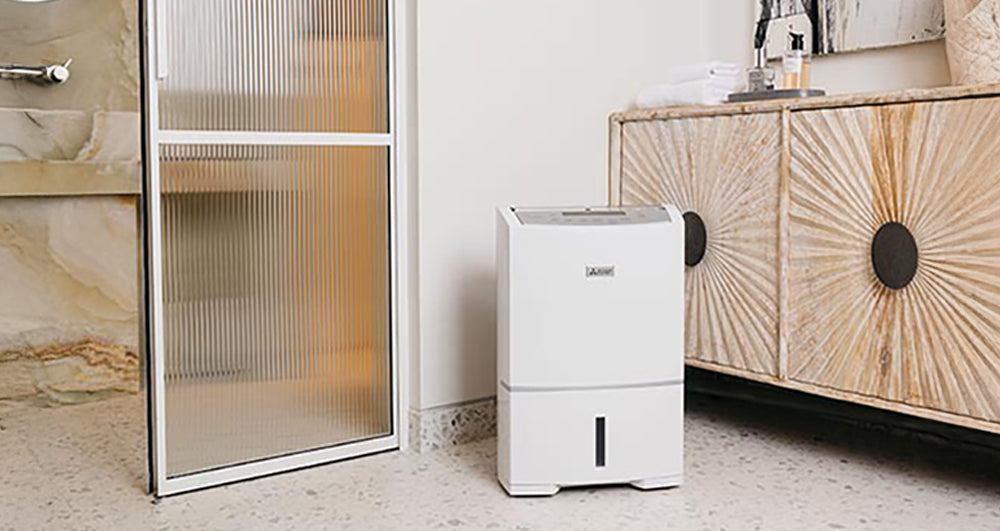
MITSUBISHI BIKUKAN Air Purifying Dehumidifier | MJ-EHV / MJ-EH Series
MITSUBISHI BIKUKAN MJ-EHV / MJ-EH Series is suitable for households that want to manage dampness, mould smell, odours and indoor air quality together. It combines an air purifying filter and activated carbon filter, and supports independent air purifying operation. Selected models include humidity sensor, odour sensor, highly-sensitive dust sensor, plus PM2.5 / PM1.0 / odour indicators, making it suitable for Hong Kong high humidity, UK / EU indoor laundry drying and Australian pollen season situations.
View ProductLarge-Capacity Dehumidifying + PM2.5 Filter

MITSUBISHI Dehumidifier | MJ-EV / MJ-E Series (16L / 23L)
MITSUBISHI MJ-EV / MJ-E Series is suitable for households that need stronger dehumidifying performance and also want PM2.5 filter support. Air passes through the PM2.5 filter in different operating modes, and the unit supports independent air purifying function. The 16L / 23L capacity range is suitable for everyday home dehumidifying, indoor laundry drying, window condensation and rooms with heavier dampness.
View ProductSmall Room / Bedroom + Silver-Ion Filter

MITSUBISHI Dehumidifier | MJ-E Series (10L / 13L)
MITSUBISHI MJ-E Series is suitable for small rooms, bedrooms, studies and mild to moderate dampness. It includes a silver-ion filter and supports independent air purifying function. Air passes through the filter in different modes, making it a practical choice for small-space dehumidifying, everyday air circulation and basic filtration support.
View Product2-in-1 Air Purifying Dehumidifier + nanoe® X

Panasonic 2 in 1 Air Purifying Dehumidifier | F-YAU / F-YAV Series
Panasonic F-YAU / F-YAV Series combines dehumidifying and air purifying functions, featuring nanoe® X, HEPA composite filter and deodorising filter. It can also support independent air purification through Fan / air-purifying-only mode. Selected models, such as F-YAU25H, include PM2.5 sensor, odour sensor and humidity / ECONAVI, making the series suitable for homes that want dehumidifying, filtration, deodorising and indoor air quality support.
View ProductMainly for Air Quality, Not Dehumidifying

SHARP Purefit Mini Air Purifier | FP-S40A Series
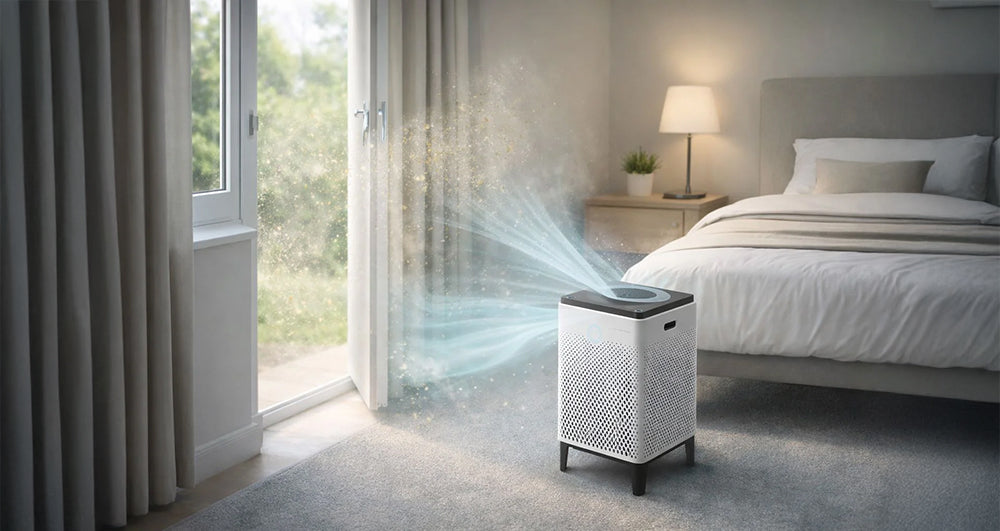
SHARP Purefit Mini FP-S40A Series is a standalone air purifier, not a dehumidifier. It is suitable for households mainly concerned about pollen, nasal allergies, PM2.5, odours, pet smells or indoor air quality. It features High Density Plasmacluster 7,000, 2-in-1 HEPA + deodorising activated carbon filters, odour sensor, and Auto / Pollen / Sleep modes, making it suitable for users who want focused air purification rather than humidity control.
View ProductHow to use these products for better results
Whether you use an air purifying dehumidifier or a standalone air purifier, correct usage matters. If filters are not cleaned or replaced regularly, airflow and filtration performance may be affected. If windows are kept open all the time, outdoor pollen, humidity or pollutants can continue entering the room, making results less stable.
| Usage Tip | Why It Matters |
|---|---|
| Use dehumidifying / air purifying functions with windows closed | Reduces outdoor humidity, pollen and pollutants entering continuously |
| Clean or replace filters regularly | Helps maintain airflow and filtration performance |
| Do not place the unit too close to the wall | Allows smoother air intake and output |
| Pay attention to airflow direction when drying laundry indoors | Works better with dehumidifying mode to help clothes dry faster |
| Use Auto / Air Purify / Laundry Mode when suitable | Different modes suit different needs such as everyday dehumidifying, drying or air purification |
| Consider continuous drainage for long dehumidifying sessions | Reduces the need to empty the water tank frequently |
Related Reading: Learn More About Dehumidifier Use and Buying
FAQ
Q: Do dehumidifiers with air purifying function help?
A: Yes, but it depends on the filter and product design. Dehumidifying mainly addresses humidity, while air purifying functions can help reduce certain pollen, dust, PM2.5, odours or airborne particles.
Q: Can a dehumidifier help with hay fever or nasal allergies?
A: A standard dehumidifier is not designed for hay fever or nasal allergies. However, models with HEPA, PM2.5 filter or air purifying function may help reduce some indoor airborne particles. They should not replace medical advice or treatment.
Q: Can a dehumidifier reduce mould smell?
A: A dehumidifier can help reduce humidity, which may reduce damp conditions and sources of musty smells. If a model includes activated carbon, deodorising filters or deodorising functions, it may also help with certain odours.
Q: Should I buy an air purifier or a dehumidifier?
A: If your main problem is dampness, window condensation or indoor laundry drying, choose a dehumidifier first. If your main concern is pollen, PM2.5, dust or air quality, consider an air purifier. If you have both issues, an air purifying dehumidifier may be more suitable.
Q: Are air purifying dehumidifiers suitable for Hong Kong homes?
A: If your home has high humidity, spring dampness, musty smells, indoor laundry drying, nasal allergy concerns or PM2.5 concerns, an air purifying dehumidifier may be more complete than a standard dehumidifier.
Q: Do UK homes need air purifying dehumidifiers?
A: If your home has winter dampness, indoor laundry drying, spring / summer hay fever, pet dander or indoor air quality concerns, a dehumidifier with air purifying function may be worth considering.
Conclusion: If your home has both dampness and air quality concerns, an air purifying dehumidifier is worth considering
Dehumidifying and air purifying address different problems. Dehumidifying helps reduce humidity, window condensation, slow-drying laundry and musty smells. Air purifying functions are more relevant to pollen, dust, PM2.5, odours and certain airborne particles. If you only need humidity control or faster laundry drying, a standard dehumidifier may be enough. But if your home also has hay fever, nasal allergy concerns, mould smell, PM2.5 or indoor air quality worries, an air purifying dehumidifier can be a more complete choice.
When choosing, check the actual air treatment method used by each product, such as HEPA composite filter, PM2.5 filter, silver-ion filter, activated carbon filter, nanoe® X or Plasmacluster. These technologies serve different purposes and should not be treated as the same. The best choice depends on your main concern, room size, humidity level and local climate.
Want to improve dampness, mould smell, pollen season comfort or indoor air quality at home?
Browse OurDearHome’s selected air purifying dehumidifiers and air purifiers, and choose by dehumidifying capacity, filter technology, room size and household needs.
Browse Dehumidifiers