Can Japanese Rice Cookers Be Used in the UK, Europe and Australia? 220–240V Overseas Model Buying Guide
Japanese rice cookers can be used in the UK, Europe, Australia, New Zealand and other overseas regions, but the key is choosing a model designed for the correct local voltage. Many rice cookers made for the Japanese domestic market are 100V and should not be plugged directly into 220–240V overseas sockets. The Japanese rice cookers sold by OurDearHome are overseas models suitable for 220–240V regions and come with a UK 3-pin plug; for customers in Europe or Australia, a suitable adaptor will be included where required. This means most households do not need to use a separate transformer.

When buying a Japanese rice cooker overseas, the most important point is to confirm whether the model is suitable for 220–240V regions.
Key Takeaways
- Japanese rice cookers can be used overseas: as long as you choose a 220–240V overseas model, they can be used in the UK, Europe, Australia and other regions.
- Do not directly use Japanese domestic 100V models: incorrect voltage may damage the appliance or create safety risks.
- OurDearHome buying point: our Japanese rice cookers are suitable for 220–240V regions, come with a UK 3-pin plug, and customers in Europe or Australia will receive a suitable adaptor where required.
Can Japanese rice cookers be used overseas?
Yes, but you must check the voltage carefully. Many people see Japanese brands such as Zojirushi, Tiger or Panasonic and assume that all Japanese rice cookers can be used overseas directly. This is not always true.
A “Japanese brand” is not the same as a “Japanese domestic model”. The same Japanese brand may offer 100V models for the Japanese domestic market and 220–240V models for overseas markets. When buying from overseas, the most important point is not only the brand, but whether the product specification clearly states that the rice cooker is suitable for 220–240V use.
Even if the rice cooker is from a well-known Japanese brand, a Japanese domestic 100V model is not suitable for direct use in 220–240V regions such as the UK, Europe, Australia and New Zealand.
Before buying, always confirm whether the product is a 220–240V overseas model.
Why should you avoid buying a Japanese domestic 100V rice cooker directly?
Japanese domestic appliances are usually designed for 100V electricity, while the UK, Europe, Australia, New Zealand, Hong Kong and Singapore commonly use 220–240V. If a 100V rice cooker is plugged directly into a 220–240V socket, it may damage the appliance, overheat or create safety risks.
A rice cooker is also a heating appliance with relatively high power consumption. It is different from a small low-power electronic device. For this reason, overseas households should not buy a Japanese domestic 100V rice cooker simply because the price or design looks attractive.

Before buying a Japanese rice cooker, always confirm whether it is suitable for your local voltage.
Can you use a transformer with a Japanese 100V rice cooker?
In theory, some users may use a step-down transformer to convert 220–240V electricity to 100V. However, rice cookers are high-power heating appliances. If used daily over the long term, the transformer must have suitable wattage, stable output and reliable quality. Otherwise, there may be risks such as overheating, insufficient power or other safety issues.
For most households, relying on a transformer for everyday rice cooking is not the ideal solution. A simpler and more reliable approach is to choose an overseas model designed for 220–240V markets from the beginning.
If you use a rice cooker daily in the UK, Europe, Australia or New Zealand, we recommend choosing a 220–240V model directly instead of buying a Japanese domestic 100V model and using a separate transformer.
What are the benefits of OurDearHome’s 220–240V Japanese rice cookers?
OurDearHome specially selects Japanese rice cookers suitable for 220–240V overseas markets, allowing overseas Chinese households to shop for brands such as Zojirushi, Tiger and Panasonic more easily, without having to judge Japanese domestic 100V models, transformer requirements or voltage compatibility by themselves.
Japanese rice cookers sold by OurDearHome generally offer the following benefits:
- Suitable for 220–240V regions
- Supplied with a UK 3-pin plug
- Customers in Europe and Australia will receive a suitable adaptor where required
- No separate transformer required
- Suitable for overseas Chinese households cooking rice, porridge and everyday family meals
What should you check before buying a Japanese rice cooker for overseas use?
If you are comparing different Japanese rice cookers, check the following points first:
| Item to Check | What to Look For |
|---|---|
| Voltage | Whether it is marked as 220–240V and suitable for overseas use |
| Frequency | Whether it is suitable for your region, such as 50/60Hz |
| Plug | Whether a suitable plug or plug arrangement is provided |
| Capacity | 1.0L / 1.8L or mini size, depending on household size and rice consumption |
| Function | Whether Micom / Fuzzy Logic, IH or pressure IH functions match your needs |
| After-sales Support | Whether purchase and after-sales support are provided by a reliable retailer |
How should overseas households choose a Japanese rice cooker?
When choosing a Japanese rice cooker overseas, you can decide based on budget, household size and how much you care about rice texture. Here are some common options:

Premium Pressure IH: for those who care deeply about rice texture
Zojirushi Pressure IH Rice Cooker | NP-BSQ Series is suitable for families with higher expectations for rice texture, keep-warm stability and advanced rice cooking control.
View Product
IH Heating: a mid-to-high range choice for consistent rice cooking
Zojirushi IH Rice Cooker | NW-QAQ Series is suitable for families who cook rice regularly and care about even heating and stable rice texture.
View Product
Panasonic IH: practical for everyday family use
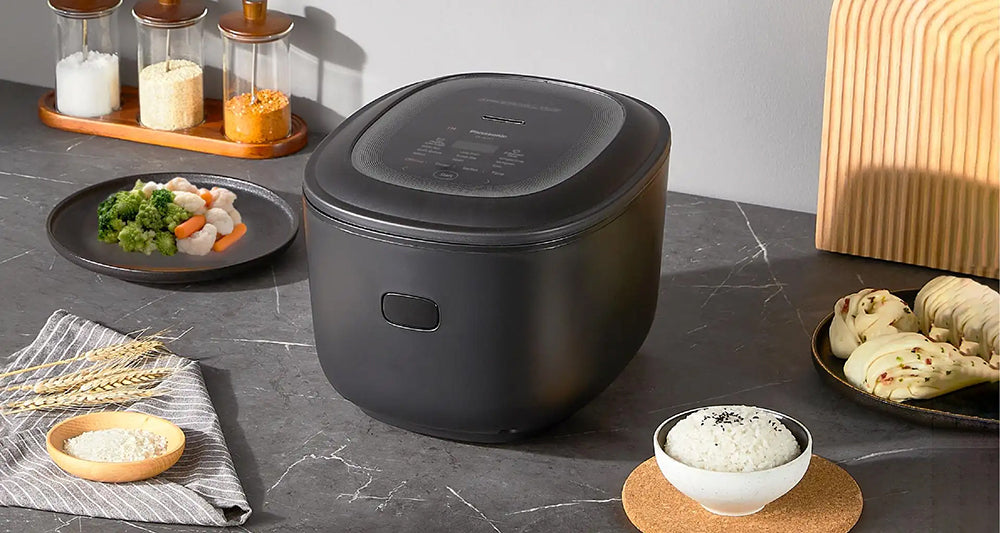
Panasonic Diamond Kamado IH Rice Cooker with Healthy Mode | SR-HBA Series is suitable for buyers who want balanced functions, easy operation and practical everyday family use.
View Product
Practical entry option: everyday rice cooking with Tacook functions
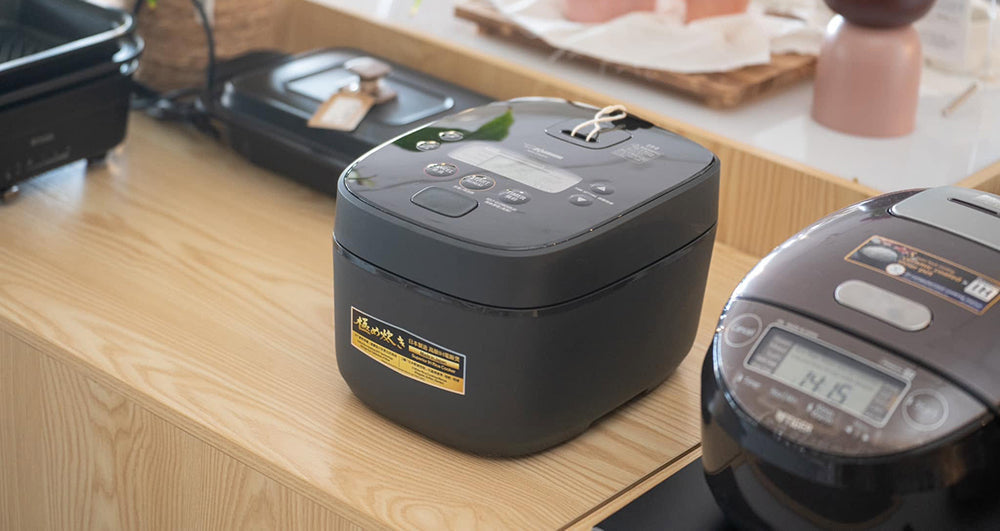
Tiger Tacook Rice Cooker | JBV-S Series is suitable for families who want to upgrade from a basic rice cooker and also use one appliance for simple everyday meal preparation.
View ProductFAQ
Q: Can a Japanese 100V rice cooker be used in the UK?
A: Direct use is not recommended. The UK usually uses 220–240V electricity, while Japanese domestic rice cookers are usually 100V. Plugging one in directly may damage the appliance or create safety risks. A 220–240V overseas model is recommended.
Q: Can Japanese rice cookers be used in Australia or Europe?
A: Yes, but you must choose a model suitable for 220–240V regions. Japanese rice cookers sold by OurDearHome are overseas models suitable for 220–240V markets.
Q: Do I need to buy a separate transformer for Japanese rice cookers from OurDearHome?
A: No. Japanese rice cookers sold by OurDearHome are suitable for 220–240V regions, so most households do not need to buy a separate transformer.
Q: Can I use a transformer with a Japanese domestic 100V rice cooker?
A: Some people do this technically, but a rice cooker is a high-power heating appliance. Long-term daily use requires a transformer with very suitable wattage and reliable quality. For most households, choosing a 220–240V overseas model directly is simpler and safer.
Q: When buying a Japanese rice cooker overseas, should I check the brand or voltage first?
A: Check the voltage first. Even with well-known Japanese brands such as Zojirushi, Tiger and Panasonic, you should confirm that the model is suitable for 220–240V regions.
Related Reading: Start with the Key Benefits of Japanese Rice Cookers
If you want to understand why Japanese rice cookers are popular among overseas Chinese and Asian households, start with our main Japanese rice cooker guide. It explains key features such as IH, pressure IH, Fuzzy Logic, thick inner pots and keep-warm functions.
Conclusion: When buying a Japanese rice cooker overseas, check for 220–240V first
Japanese rice cookers can be used overseas, but only if the model is suitable for local voltage. For overseas Chinese families in the UK, Europe, Australia, New Zealand and similar regions, the most important point is to avoid mistakenly buying a Japanese domestic 100V rice cooker and to choose a clearly marked 220–240V overseas model instead.
OurDearHome selects Japanese rice cookers suitable for 220–240V regions, including Zojirushi, Tiger and Panasonic models, helping overseas families enjoy stable rice texture and everyday convenience with greater peace of mind.
Looking for a Japanese rice cooker suitable for overseas use?
Browse OurDearHome’s selected 220–240V Japanese rice cookers for the UK, Europe, Australia and other overseas markets.
Browse Japanese Rice Cookers